0121 312 3222 (Mon-Fri)





Which Floor Mats Are Safe with Underfloor Heating?

Choosing a floor mat for a heated floor takes a little more thought than usual. The mat’s face, and especially its backing, will be in contact with sustained warmth day after day. This guide explains what to look for, which backings and mats to be cautious with, how to spot the signs of deterioration and what to check if you have LVT. At the end of each section we’ve included a few suggestions from our range.
Key Takeaways
- Choose a mat whose product information specifically states that it is suitable for use with underfloor heating.
- Check the backing as well as the surface material, since the backing rests directly on the heated floor.
- Follow any temperature limit stated by the manufacturer, particularly for underlays and anything that adds a layer between the mat and the floor.
- Natural latex backing can perish with sustained warmth, and PVC backing needs particular care: heat can speed up plasticiser migration, which can damage or discolour the floor.
- Talk directly to your underfloor heating supplier, as system tolerances for trapped heat differ and air flow may be important.
- Watch for curling, cracking, odour, discolouration or backing that is beginning to break down.
- Check the flooring manufacturer’s guidance before placing any mat on LVT over underfloor heating.
A loose mat is different from an underfloor heating mat
An electric underfloor heating mat is installed beneath the floor finish; a loose entrance mat or floor mat sits on top of a heated floor. This guide is about the loose mat, whose face and backing are exposed to sustained warmth.
A floor finish may be suitable for underfloor heating without every mat being suitable on top of it. Look at the mat’s materials, backing and any stated temperature limit rather than judging compatibility by the flooring alone.
A thick or insulating covering can hold heat against the mat and floor. Avoid adding layers unless the mat, flooring and heating-system guidance allows them, as trapped warmth can contribute to material damage and may conflict with the system’s requirements.
Underfloor heating systems differ in how much trapped heat they can tolerate, and air flow around and beneath a mat may be important. Talk directly to your underfloor heating supplier before placing a mat or underlay on a heated floor, rather than assuming it will be fine.
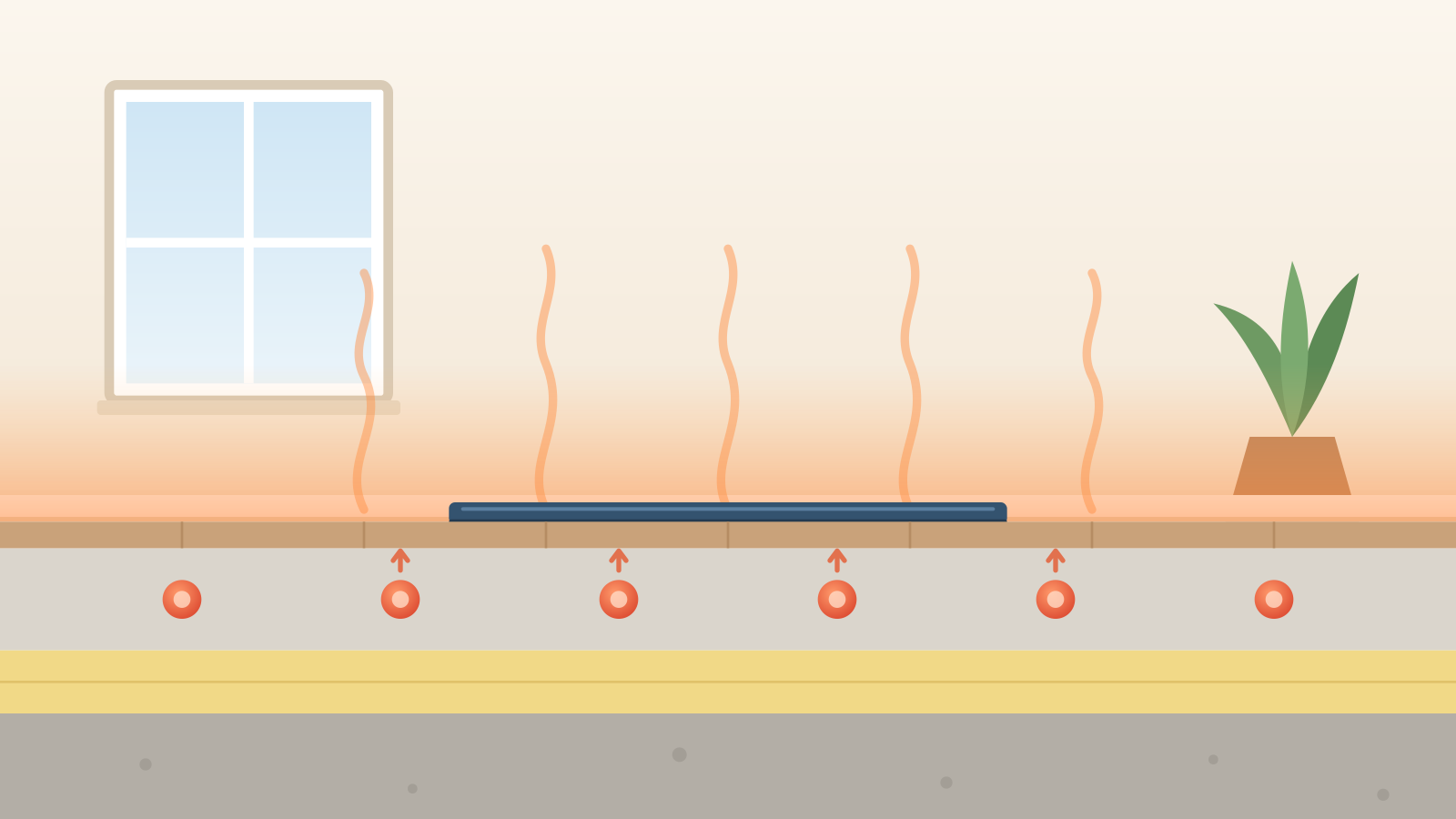
How warmth from underfloor heating can shorten a floor mat’s life
With sustained warmth, some backing materials can dry out, harden or perish. As the backing weakens, it may lose its bond with the mat, break down or leave residue that affects the floor beneath.
The face material does not tell the whole story. Since the backing is in direct contact with the heated floor, it may be the part most vulnerable to heat-related deterioration.
Plasticiser migration is a particular concern with PVC-based backings. Plasticisers are additives that keep PVC flexible, and they can migrate out of the backing into the floor beneath. Warmth from underfloor heating can accelerate this, which can damage or discolour the floor.
Look for curled edges, cracks, an unusual odour, discolouration or a backing that feels brittle or starts to break apart. Stop using the mat if these changes appear, so further deterioration does not affect the flooring beneath it.
What to look for in a mat for a heated floor
Whatever type of mat you are choosing, the same few questions apply:
- Is it stated as suitable for underfloor heating? Look for this in the product information rather than assuming. Appearance and fibre alone are not reliable guides to heat suitability.
- What is the backing made from? Mats that state compatibility often use backings such as TPE, TPR or vinyl. Natural latex is the one to be most cautious with, as it can break down or perish with sustained heat. PVC-backed mats need care, because heat can accelerate plasticiser migration, which can damage or discolour the floor. Use them on a heated floor only if the product information specifically confirms compatibility, or in a mat well with a barrier (see coir matting below).
- Is there a temperature limit? Some products state a maximum underfloor heating temperature. Keep the floor within it.
- What will it sit on? A mat that is suitable for underfloor heating still needs to suit the floor finish beneath it, particularly LVT (see below).
Entrance and door mats
For entrance mats, the face material (cotton, microfibre, velour or ribbed vinyl, for example) matters for absorbency and appearance, but the backing is what determines whether the mat is a good fit for a heated floor. Washable mats with TPE, TPR or rubber-free vinyl backings are a sensible place to start, provided the manufacturer confirms they can be used with underfloor heating. Avoid mats with a natural latex backing, or a PVC backing that hasn’t been confirmed as compatible.
Our suggestions for heated floors:
- MuckStopper Eco Mat – absorbent microfibre polyester and cotton face with a TPE backing.
- CottonGuard Eco – 100% cotton face with a recyclable TPR backing.
- Velour Vinyl Mats – absorbent velour face with rubber-free vinyl backing and borders, in standard sizes or custom lengths.
- Rib Vinyl Mats – ribbed surface with vinyl backing and low-profile borders, in a range of colours and standard sizes.
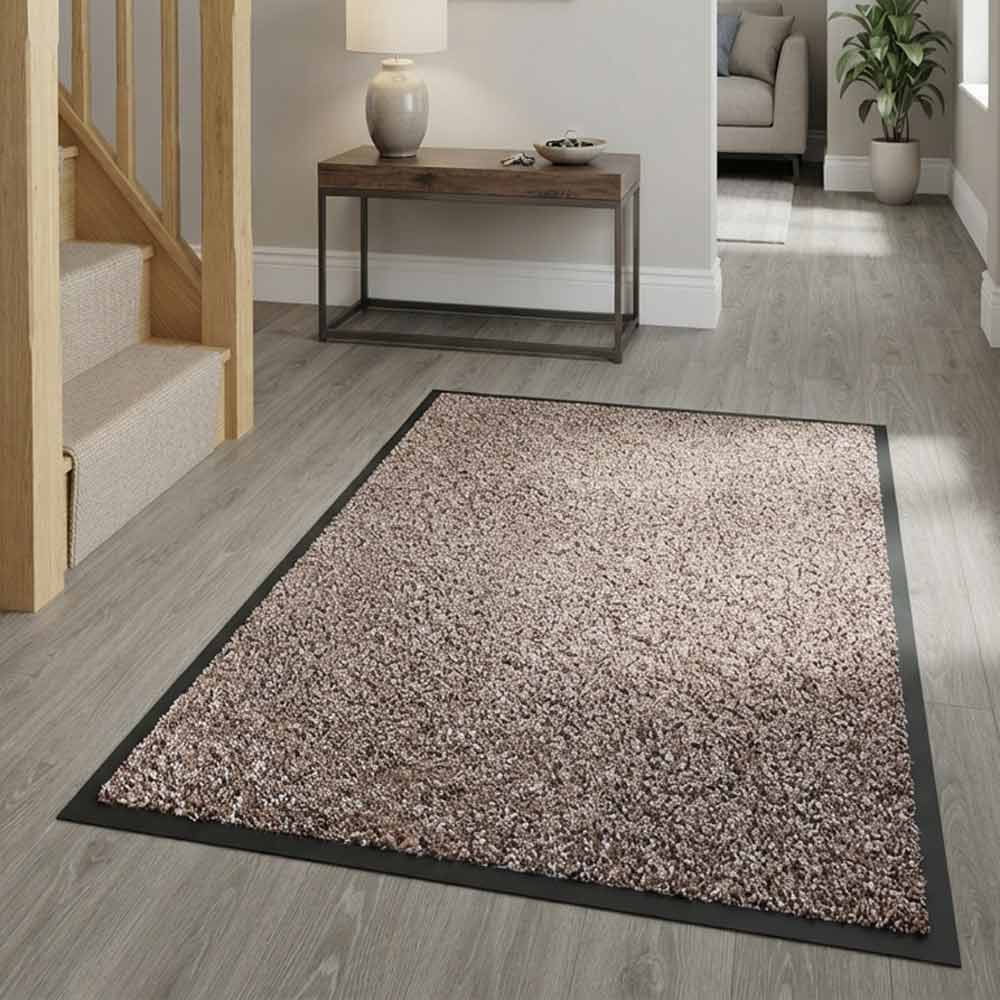
Coir matting for underfloor heating
Coir needs particular care because the fibre and the backing are chosen separately, and the same-looking mat can behave very differently on a heated floor.
- Natural coir with a natural latex backing is a poor choice over underfloor heating. Sustained warmth can cause the latex to break down or perish, which damages the mat and can leave residue on the floor.
- PVC-backed coir can be used on a heated floor or in a mat well with a barrier, but only if the product information specifically confirms it is compatible as this can differ by manufacturer.
- Synthetic coir (a polypropylene face) with a latex backing can be compatible with underfloor heating when used with a barrier. The barrier could be the floor itself or, if the mat is going in a well or recess, something like marine plywood.
Because natural and synthetic coir can look similar, always check the product-specific underfloor heating guidance rather than relying on how the mat looks.
Our suggestions for heated floors (used with a barrier):
- Ribbed Synthetic Coir – 13mm depth, 100% polypropylene face with latex backing.
- Synthetic Coir Roll – 100% polypropylene face with latex backing.
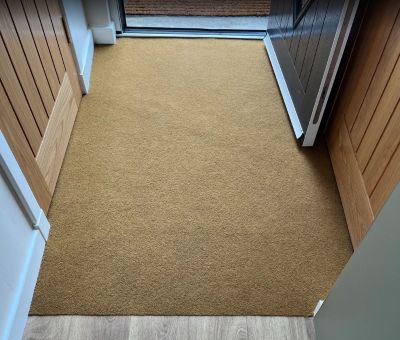
Chair mats
Polycarbonate chair mats are suitable for use on heated floors. As with any product, check the specific product’s underfloor heating guidance before using one on a heated floor.
Our polycarbonate chair mats:
- Polycarbonate Rectangular Chair Mat
- Polycarbonate Chair Mat with Lip
- BioPlus Polycarbonate Chair Mat
- Ultra Thick Polycarbonate Chair Mat
- Value Polycarbonate Chair Mat
Rug and mat underlays
An underlay adds another layer between the heated floor and whatever sits on top, so check its stated temperature limit as well as its material. Avoid stacking several layers unless the mat, flooring and heating-system guidance all allow it.
Our suggestion:
- Teebaud Underlay – a polyester underlay with a dry resin coating for use beneath rugs and mats, suitable for underfloor heating up to 32°C.
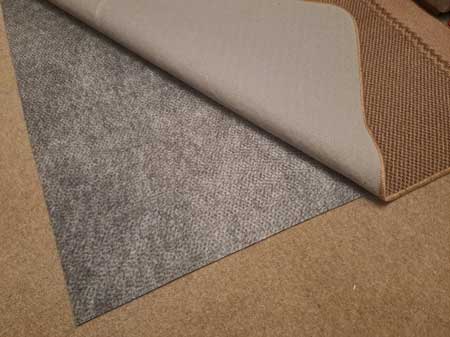
Take extra care with LVT over underfloor heating
LVT flooring combined with underfloor heating can present an issue when a mat is placed on top. Before putting down a mat, check the flooring manufacturer’s guidance or speak with the manufacturer or supplier.
Consider the mat and floor finish together. A mat described as suitable for underfloor heating does not override restrictions set by the LVT flooring manufacturer, and you should not guess at temperature limits or compatibility if the guidance is unclear.
Practical checks to protect a mat for longer
- Check suitability before buying. Choose a mat whose product information states that it is suitable for underfloor heating.
- Follow the stated limit. Keep the mat within any temperature limit given by its manufacturer. For example, our Teebaud underlay is rated for underfloor heating up to 32°C.
- Inspect the mat from time to time. Look for curling, cracking, unusual odour, discolouration or backing breakdown, and remove it if damage starts to appear.
- Follow the floor guidance. Use the floor-finish and heating-system manufacturers’ instructions for the completed floor build-up and any loose coverings.
- Talk to your underfloor heating supplier. System tolerances differ, including how much trapped heat they can accept and how much air flow is needed, so check with them before covering a heated floor.
- Ask if you are unsure. Contact Trusted Mats for guidance on a product’s suitability or temperature limit rather than guessing.
Frequently Asked Questions
Can underfloor heating make a mat smell?
Warmth can make an existing smell from dampness, cleaning residue or the mat’s materials more noticeable. If the odour changes when the mat is warm, check whether it is clean and fully dry before deciding whether it is a sign of deterioration.
How often should I check a mat on a heated floor for damage?
Inspect it weekly when it is first in use, then include it in your regular floor-cleaning routine once its condition remains stable. Check it sooner if you change the heating schedule or move the mat.
Can a mat discolour the flooring beneath it?
Yes, colour transfer, residue or a reaction between a backing and the floor finish can leave marks. The effect can vary with the materials in the mat and flooring, and with what becomes trapped between them.
Conclusion
When deciding which floor mats are safe with underfloor heating, look at the backing as carefully as the face material and follow any stated temperature limit. Choose products that are stated as suitable, be cautious with natural latex and unconfirmed PVC backings, and take extra care with LVT over a heated floor by following the flooring manufacturer’s guidance. Finally, talk directly to your underfloor heating supplier, as system tolerances for trapped heat and air flow differ.