0121 312 3222 (Mon-Fri)





How To Measure And Fit A Recessed Mat Well Like A Pro In 5 Simple Steps

When measured and fitted correctly, recessed entrance mats significantly improve the appearance and safety of a property. Correctly sized entrance matting can remove around 80–90% of dirt and moisture at the door, which, even today, is still one of the simplest ways to cut cleaning costs and protect your floors. In this guide, we share our practical, step‑by‑step method so you can measure and fit a recessed mat well accurately the first time, whether you choose coir or another type of matting.
Key Takeaways
| Question | Short Answer |
|---|---|
| 1. How do I start measuring a recessed mat well? | Measure length, width and depth at several points and record the largest figure for each so the mat fits the worst‑case size. |
| 2. What depth should my recessed mat be? | Typical UK mat wells are around 10–17 mm deep, so choose coir or entrance matting that matches, or use plywood and fillers to bring it flush. |
| 3. Which type of matting works best in a recess? | Roll coir matting or synthetic entrance mat systems both work well, provided the thickness suits the well depth and door clearance. |
| 4. Can I get a mat cut to my exact well size? | Yes, our made to measure mats service cuts mats to your stated sizes so you can drop them straight into the recess. |
| 5. What if my existing recess is deeper than the mat? | Use packing boards, screed, or filler mats to build up the base until the matting sits flush with the surrounding floor level. |
| 6. Where can I see mats designed for mat wells? | Browse our dedicated entrance mat wells and recesses range to compare suitable coir and entrance matting options. |
| 7. Who can help if I am unsure of my measurements? | You can contact our experts directly through our contact page and we will talk you through the measuring process. |
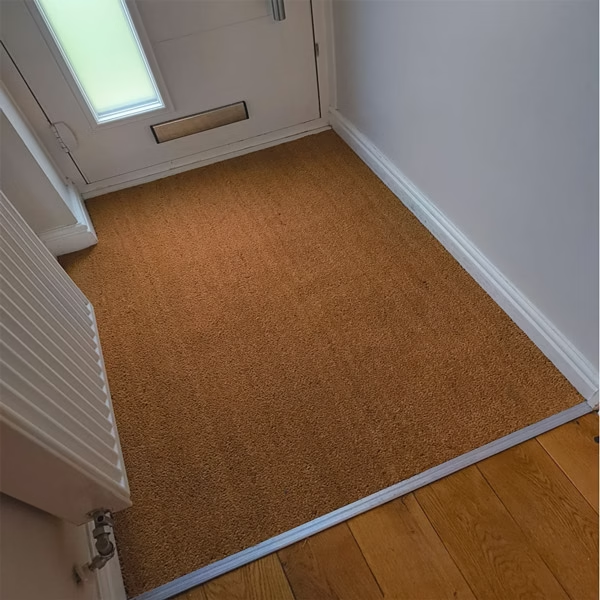
1. Understanding What A Recessed Mat Well Is And Why Fit Matters
A recessed mat well is a shallow tray or sunken area at an entrance that holds matting so the surface finishes almost level with the surrounding floor. The goal is a flush, safe transition that cleans footwear without creating a trip hazard or catching the door.
Typical recessed depths in the UK range from shallow 10 mm recesses up to deeper 17 mm and beyond, so the type and thickness of coir or entrance matting you choose really matters. To help you avoid the same mistakes, here are the most common issues customers contact us about their well mat as follows:
- Their mat is too thick for the recess which leads to difficulty opening doors over the mat, premature wear and a potential trip hazard.
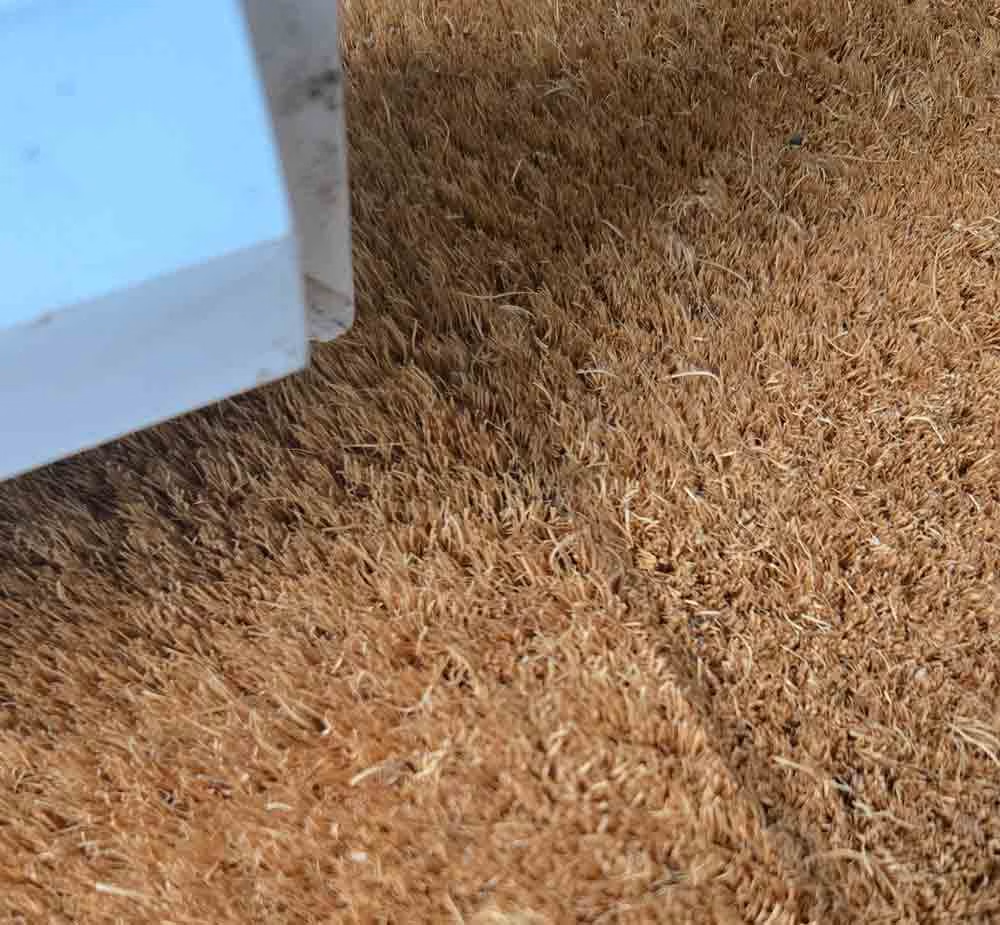
- The mat well is not a perfect rectangle and / or the mat is too small resulting in large gaps between the mat edge and well edge which look unsightly, get progressively worse and may cause a rut for wheels or heels to get stuck in.
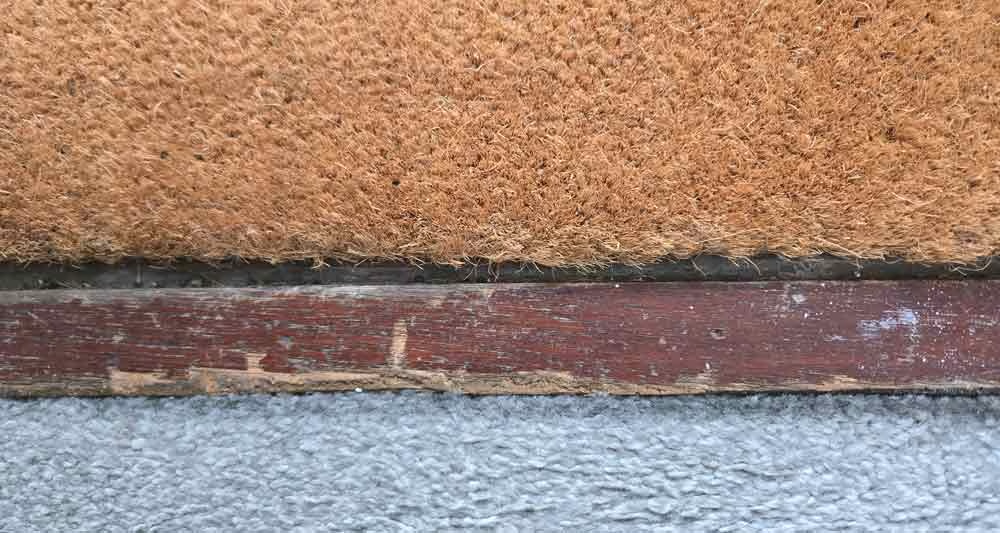
- The mat is too thin resulting in a dip when walking over the mat and a trip hazard at the edge of the mat well.
- The base of the well is not flat, leading to the mat rocking underfoot, or not flush with the surrounding floors at certain edges of the mat.
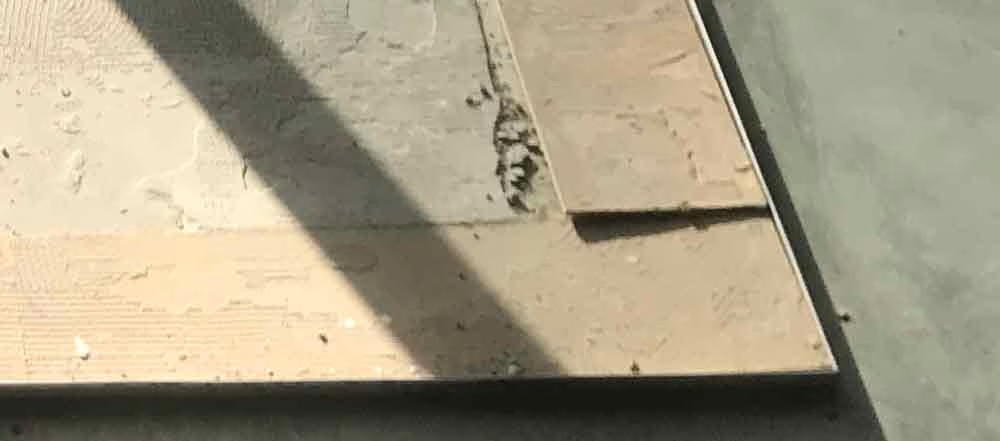
When a recessed mat is correctly sized and fitted, it becomes part of the floor, not a loose accessory. That improves safety, helps your entrance look smarter, and makes cleaning easier because cleaning trolleys and vacuum cleaners glide straight over the surface.
Whether you are dealing with a home doorway or a busy commercial entrance, the measurement process is essentially the same. We only adapt the choice of matting type, such as coir for character entrances or modular systems for very heavy footfall.
2. Tools You Need Before Measuring A Recessed Mat Well
Good results start with the right tools, even for something as straightforward as a mat well. We always recommend a simple kit so your measurements are reliable and repeatable.
For most recessed mats you will need:
- A rigid tape measure long enough for your entrance span.
- A straight edge or spirit level to check how flush the finished surface will be.
- A steel rule or depth gauge to measure recess depth accurately.
- A pencil and notepad, or your phone, to record each dimension at several points.
- Optional: masking tape to mark reference points around the well.
If you plan to trim coir matting yourself, a sharp utility knife and a sturdy cutting board or sacrificial sheet are essential. Read our step by step guide: How To Cut and Install Coir Matting in 7 Simple Steps which includes a video to show you the process we use. For larger commercial projects, additonal cutting tools may be required or modules may be pre cut so it can simply be dropped into place and trimmed as necessary.
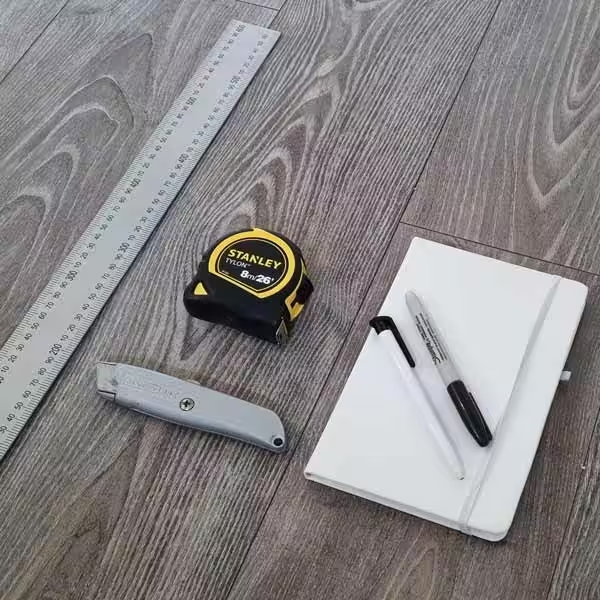
Having everything to hand before you start prevents mistakes like reading from the wrong mark on the tape or guessing depths. Accurate tools mean an accurate mat, and that is what gives you a well-fitted, professional finish.
Once your tools are ready, you can move on to measuring length, width and depth in a consistent way, which we cover in the next section.
3. How To Measure The Length And Width Of Your Mat Well Accurately
The first key step is getting the overall footprint of the recess right. We always tell customers to assume that no opening is perfectly square, especially in older properties.
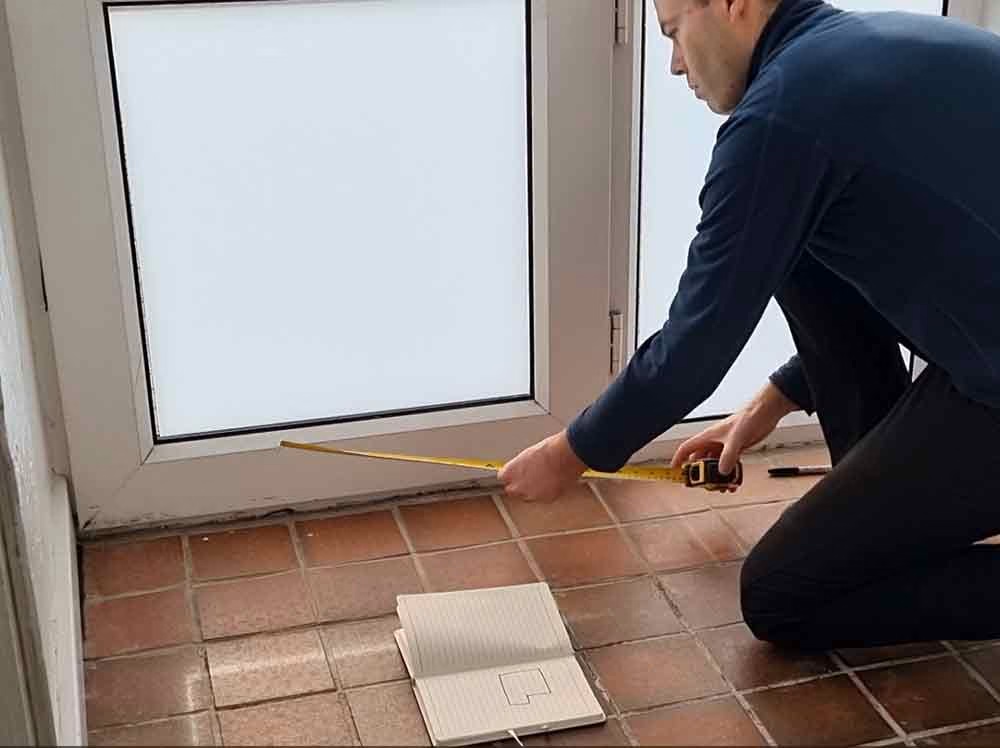
Start by measuring the internal length of the well from threshold to back edge. Take this measurement at least in three locations: left side, centre, and right side, and record all three values.
Repeat this process for the width, measuring front, middle, and back across the recess. You may find differences of a few millimetres, which are normal and must be allowed for when you order coir or entrance matting.
Once you have these figures, work with the largest length and largest width. That ensures the mat fills the tightest span and avoids unsightly gaps where the recess is widest.
Subtract a small tolerance of say 3-5mm, so you can account for expansion of the mat and make it easy to lift for cleaning or when the time comes to replace.
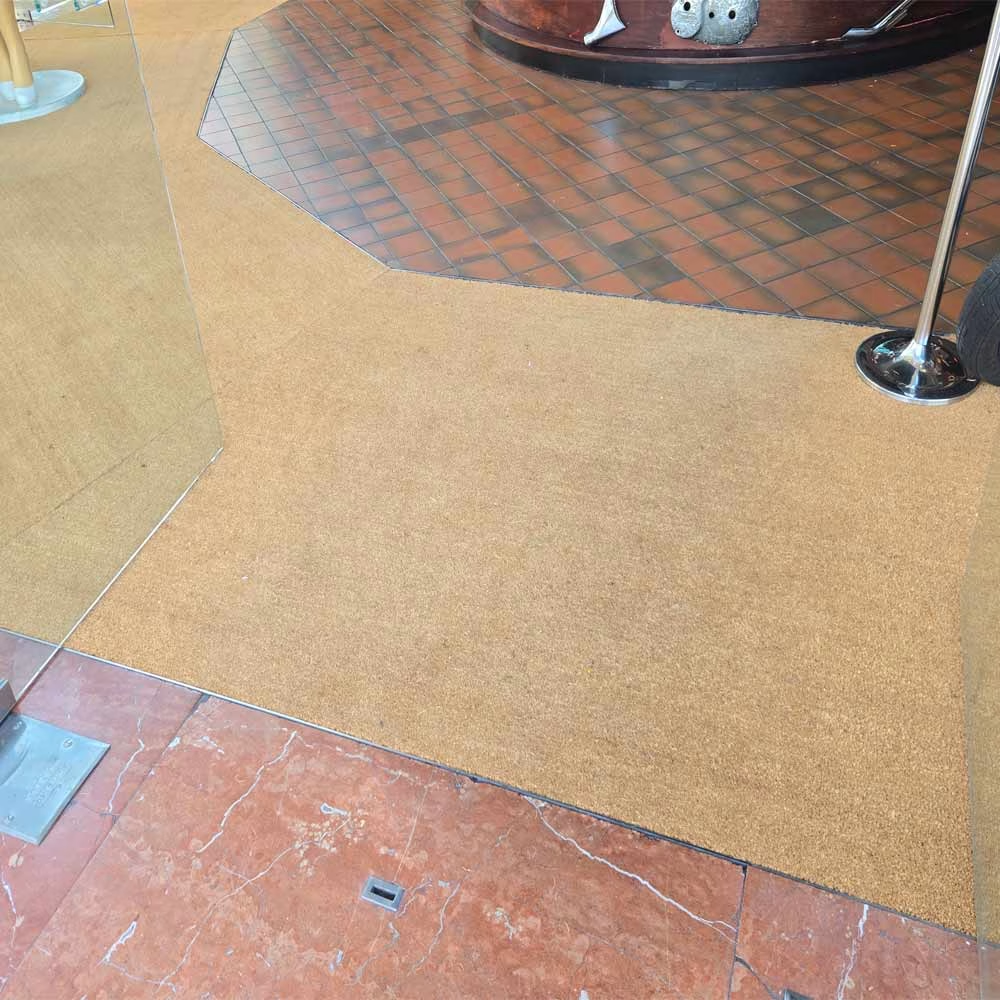
If your recess has rounded corners or unusual shapes, measure the maximum rectangle that fits inside the space. You can then trim coir matting on site to follow the exact contour if required.
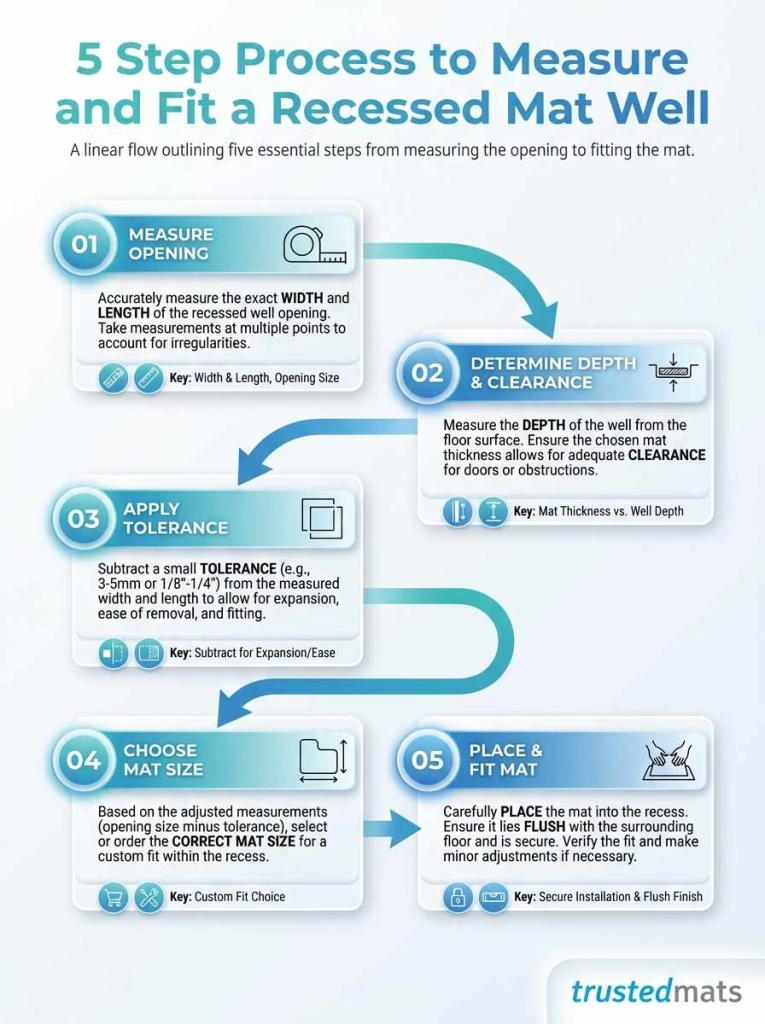
A concise 5-step guide to precisely measuring and fitting a recessed mat well. Perfect for DIY installation planning.
4. Measuring Recess Depth And Matching It To Mat Thickness
Depth is where many recessed mat projects go wrong, especially when coir is involved. You want the top of the matting to sit just below the surrounding floor surface, not above it.
Use a straight edge laid across the surrounding floor and measure down to the base of the recess at several points using a ruler or depth gauge. Again, record all readings and work from the largest depth you find.
In the UK, typical mat wells are often in the 10–17 mm range, while common entrance mat thicknesses for flush recesses are roughly 8 to 12 mm. Our synthetic and natural coir roll matting, for example, comes in several depths so you can match what you have on site.
On our site you can choose from:
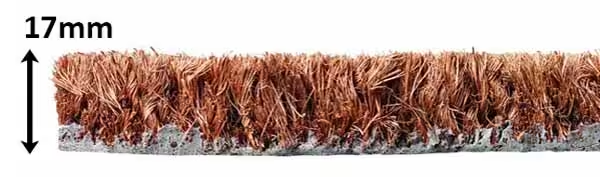
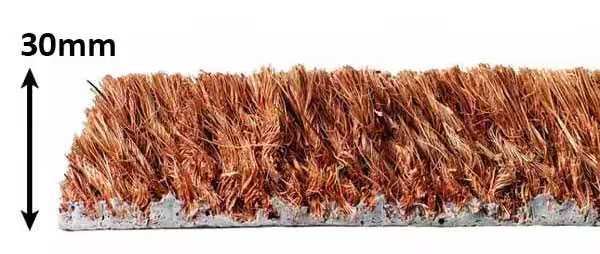
If your mat well is deeper than the mat you want, you can pack the base with plywood or use floor screed so the matting finishes at the correct height. You can also use cut to size rubber mats in smaller recesses to fine tune levels. See our Plate Finish Rubber Roll Matting which can be used to raise the level of mats in mat wells.
Always remember to allow clearance for the door leaf if it opens over the mat. A few millimetres of free space can prevent rubbing and protect both the mat and the door in daily use.
Top Tip:
When measuring a matwell, record length, width, and depth at multiple points and always work with the largest figure for each dimension so the mat fits every part of the recess.
5. Choosing The Right Matting For Your Recessed Well
Once you know the internal size and depth, you can decide which matting type will work best in your recess. Traditional coir matting remains a very popular choice for character entrances, while synthetic and modular systems are common in busy commercial sites.
Coir offers a classic, natural look and excellent scraping performance, which is why our Commercial Compliant Coir Roll Matting available in multiple depths is used widely in offices and public buildings. It is fire and wear rated, so it suits more demanding environments than basic domestic coir.
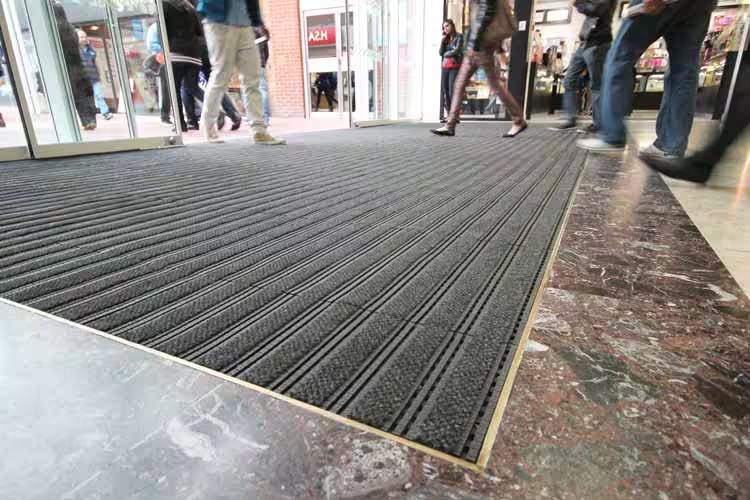
For very high footfall locations, modular and roll systems can sit into mat wells just as easily as coir. Products such as our Premier Track Modular Entrance Matting and Frontrunner Plus Entrance Well Matting are designed specifically around recessed installations.
When choosing, consider:
- Traffic level and type of footwear or wheeled traffic.
- Indoor only or indoor plus outdoor exposure.
- Desired appearance, for example natural coir versus ribbed textile.
- Maintenance expectations and cleaning methods.
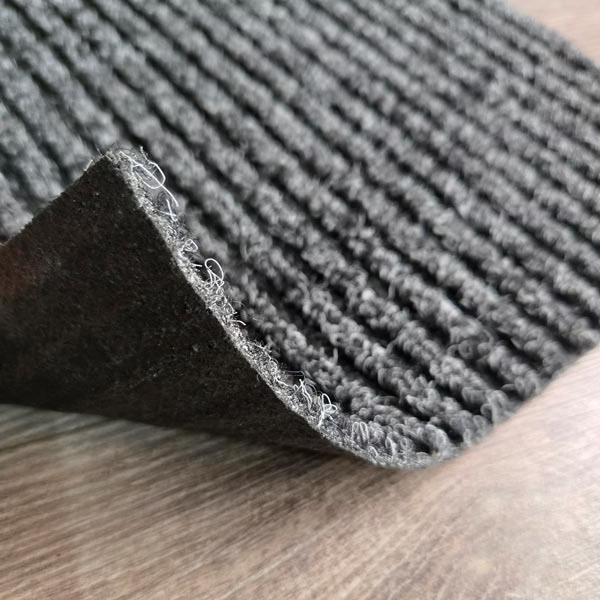
Our entrance mats collection lets you compare several styles that can be installed into recesses, including roll matting and heavy duty textile surfaces. If you are unsure which matting suits your measurements, our team can review your figures and recommend specific products.
Whatever you choose, always double check the published thickness against the depth of your well to ensure a safe and flush fit once installed.
6. Made To Measure Coir And Entrance Mats For Recessed Wells
Measuring a mat well is only half the job, the other half is making sure the mat you purchase is cut accurately to those figures. This is where made to measure services are especially useful.
Ordering coir by the roll and cutting it yourself is possible for both home DIY projects and experienced installers alike. Larger or more complex projects may require a professional install. Our made to measure mats service also offers mats that can be made to your provided dimensions and may be dropped straight into your mat well. However, bear in mind that not all mat wells are perfect rectangles which means it’s usually better to buy larger and trim to fit on site.
You provide us with the internal length and width of the recess, plus the depth so we can match the thickness. We then cut the matting slightly oversize if you request it, which allows for a light trim on site for a very tight finish.
For commercial projects that demand compliant matting, our commercial coir and specialist entrance systems can also be supplied in custom lengths. That helps contractors save time during installation and reduces waste.

If you are replacing an old coir mat, you can also lift the existing piece and measure it directly as a cross check. We still recommend measuring the recess itself though, especially in older properties where building movement can change dimensions slightly over time.
With an accurate made to measure mat, fitting often becomes a simple drop in operation, with only minor trimming needed in more irregular recesses.
7. Step By Step: How To Fit Coir Or Entrance Matting Into A Recessed Well
Once your new mat arrives, you can move on to fitting it. We will focus on a simple, practical process that works for most recessed coir and textile matting installations.
Start by clearing and cleaning the recess thoroughly, removing old adhesive, dust, and debris. Check the base is level and dry, then test fit any packing boards (plywood) or screed if you are adjusting depth.
- Dry fit the mat in the recess without adhesive first to check the dimensions.
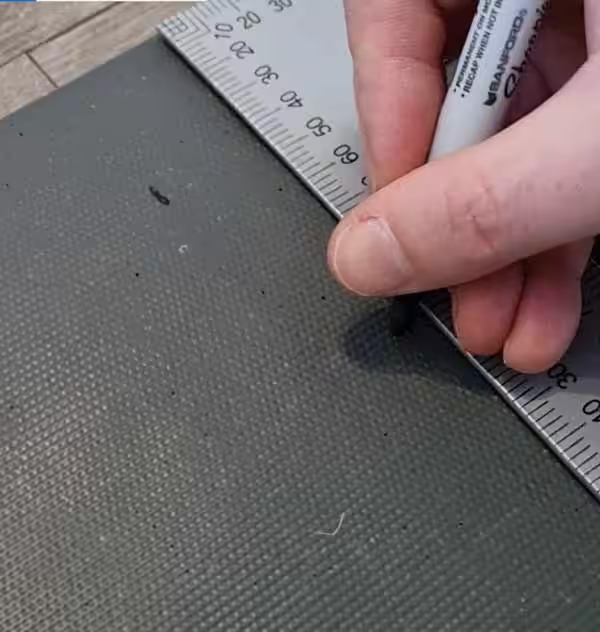
- Mark any tight spots with a pen so you know where small trims are needed.
- Trim carefully from the back of coir or mat using a sharp knife and straight edge, in small passes.
- Apply adhesive or carpet tape if required, usually to the base of the well rather than the mat itself.
- Place the mat into the recess, working from one side to the other to avoid trapping air.
- Press down firmly and check that all edges sit flat and flush with surrounding floors.

Most smaller domestic recessed mats can simply sit within the well without full bonding, because the edges of the floor hold them in place. In heavier traffic or public buildings, we advise adhesive, tape or mechanical fixing so the mat cannot creep or lift over time.
After fitting, open and close the door several times to ensure there is no contact with the mat surface. If it does catch, you may need to reduce the mat depth or adjust door clearance.
Did You Know?
When measured and fitted correctly, recessed mats can remove around 80–90% of tracked dirt and moisture, which can reduce overall cleaning costs by up to half.
8. Common Measurement And Fitting Mistakes To Avoid
After more than two decades in matting, we see the same avoidable issues appear around recessed wells. Avoiding them is usually a matter of slowing down at the measuring stage.
The most common mistakes include:
- Measuring only once, in one place, and assuming the recess is perfectly square.
- Ignoring depth and choosing coir or matting only by length and width.
- Forgetting door clearance, so the door scrapes the top of the mat.
- Not cleaning or levelling the recess before fitting, which leads to uneven support and rocking.
- Over‑trimming coir, which cannot be put back if you cut it too small.
Always double check your figures before you order. We are happy to talk through your measurements if anything looks unusual or inconsistent.
Taking this care at the start prevents gaps around the mat and avoids the cost of reordering material because a mat has been mis‑cut.
9. Planning Mat Coverage, Dirt Control, And Doorway Size
Measuring a recessed well is not only about making a mat fit, it is also about making sure the matting covers enough distance to actually do its job. Today, the same basic principles of effective entrance matting still apply.
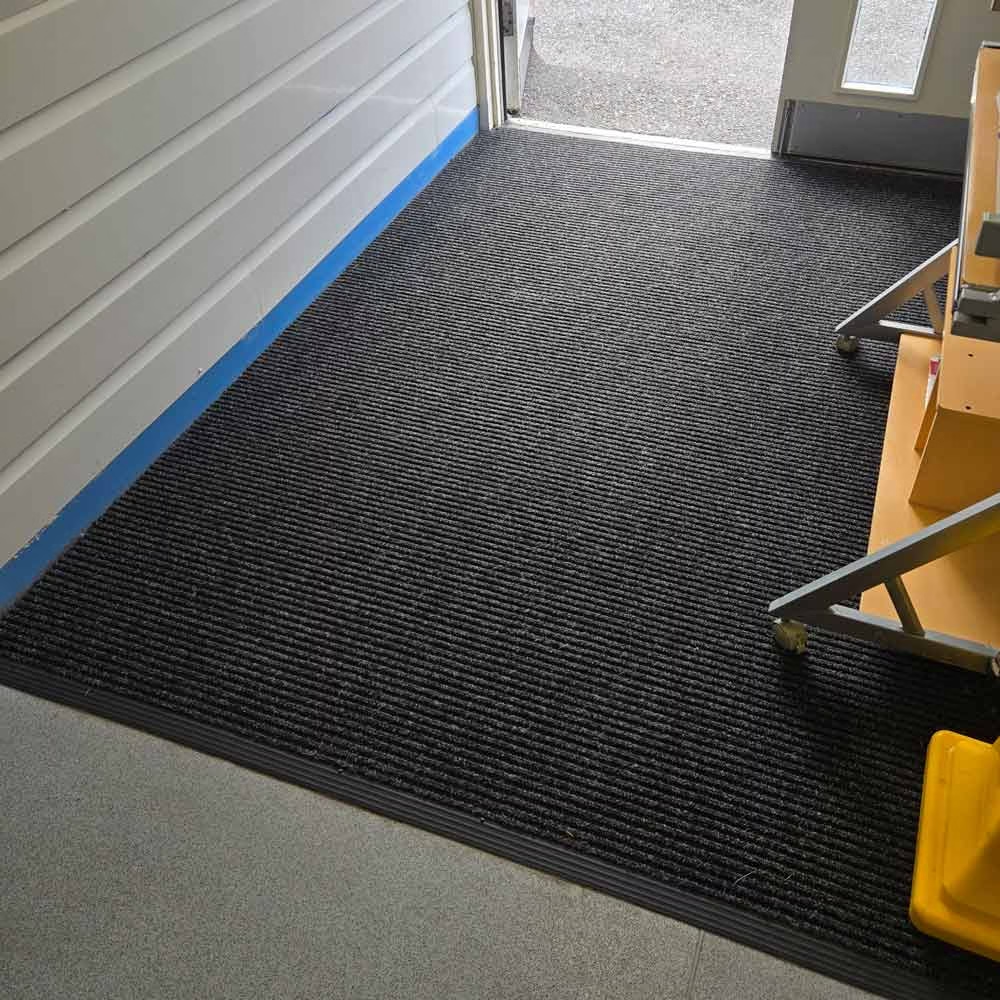
As a guideline, we usually aim for at least 6 feet of matting length inside and around an entrance, and in heavy traffic areas 10–15 feet is ideal. That might be achieved with a combination of an outdoor scraper mat and an indoor recessed mat well.
Doorway width also influences how you plan the mat. Typical single front door openings run around 84cm (33″), while double doors can be 150cm (60 inches) or more, so your recessed mat should be sized to cover as much of that width (at least 90%) as possible.
If your existing recess is shorter than you would like, you can still improve performance with high quality coir or ribbed entrance matting. The key is to ensure every footstep passes over some form of matting before people step onto your finished floors.
When in doubt, sketch your doorway and recess on paper and mark out the mat coverage clearly. That simple exercise often highlights where you might want to extend matting or add an additional loose lay mat outside.
Once you are happy that your measurements will give sufficient coverage, you can finalise your coir or matting order knowing it will work hard for you from day one.
10. Maintenance Considerations For Recessed Coir And Entrance Matting
Good measurement and fitting give you a professional finish, but long term performance depends on regular maintenance. Recessed mats are out of sight, so they can be overlooked until they become loaded with dirt.
For coir matting in mat wells, we suggest regular vacuuming, ideally daily in commercial entrances and at least weekly at home, more so during wet seasons. Periodically lift the mat, if practical, to clean out grit and dust from the base of the recess.
Modular and roll entrance systems often allow for easy rolling or lifting so you can wash down the recess and the back of the mat. Always let the area dry before refitting so moisture does not become trapped under the mat.
If your coir wears down over several years, replacing it is straightforward if you still have your original measurements. After years of use, many of our customers return to reorder the same coir depth and size, because the recess itself has not changed.
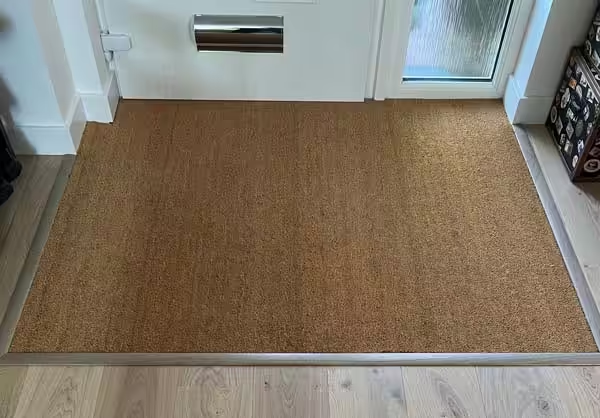
If you notice the mat sitting low in the recess after many years of use, it might be a sign that the coir has compacted and needs refreshing. In that case, a new piece of coir cut to your well size will bring the entrance back to its original performance and appearance.
Keeping on top of basic cleaning will protect both your mat investment and the surrounding floor finishes, which is exactly what a well fitted recessed mat is designed to do.
Conclusion
Measuring and fitting a recessed mat well is a straightforward process when you break it into simple steps. Take accurate length, width, and depth readings at several points, choose coir or entrance matting that matches your recess and traffic level, and fit it carefully so the surface finishes flush with the surrounding floor.
A well specified recessed mat can remove the majority of dirt and moisture before it reaches your floors, cutting cleaning costs and improving safety. If you would like expert help selecting or sizing coir or other matting for your recess, our team at Trusted Mats are ready to assist so you get a mat that works for you on day one and for many years to come.